
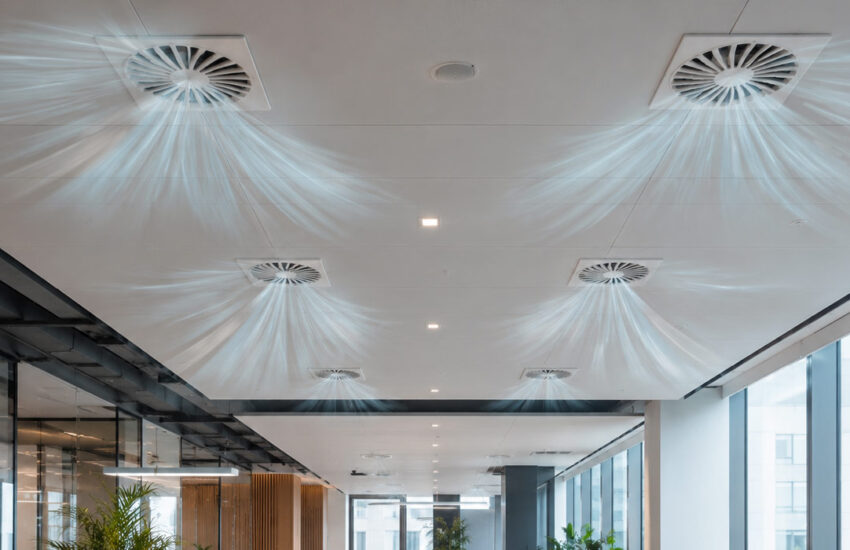
How Do Ceiling Diffusers Improve Air Distribution?
Understanding the Role of Ceiling Diffusers in HVAC Systems
A Ceiling Diffuser is an essential HVAC air distribution device designed to distribute conditioned air evenly throughout an indoor space. Installed in ceilings and connected to ductwork systems, ceiling diffusers help deliver cooled or heated air in a controlled pattern, ensuring uniform temperature distribution, balanced airflow, and enhanced occupant comfort.
By directing air in multiple directions and promoting effective air mixing, ceiling diffusers improve HVAC system efficiency while reducing drafts, hot spots, and cold spots within the occupied area.
What is a Ceiling Diffuser?
A Ceiling Diffuser is an air outlet installed at the end of an HVAC duct system that disperses conditioned air into a room. Unlike a simple grille, a diffuser is specifically engineered to distribute air uniformly while controlling air velocity and airflow patterns.
Ceiling diffusers are commonly manufactured from:
- Aluminum
- Galvanized Steel
- Powder-Coated Metal
- Stainless Steel (for specialized applications)
They are available in various designs, including square cone diffusers, round diffusers, and multi-directional ceiling diffusers.
How Do Ceiling Diffusers Improve Air Distribution?
1. Provide Uniform Airflow Distribution
The primary function of a ceiling diffuser is to distribute air evenly throughout the room.
Instead of directing air into a single area, the diffuser spreads conditioned air across multiple directions, helping maintain consistent temperatures across the occupied space.
Benefits include:
- Better thermal comfort
- Reduced temperature variations
- Improved occupant satisfaction
2. Eliminate Hot and Cold Spots
Poor air distribution can create areas that are too warm or too cold.
Ceiling diffusers help prevent this by ensuring conditioned air reaches all parts of the room, resulting in:
- Uniform temperature control
- Balanced indoor environments
- Improved HVAC effectiveness
3. Improve Air Mixing
Effective air distribution depends on proper mixing of conditioned air with room air.
Ceiling diffusers create airflow patterns that encourage:
- Better air circulation
- Faster temperature equalization
- Consistent environmental conditions
This is particularly important in large commercial spaces and high-occupancy areas.
4. Reduce Drafts
Direct high-velocity airflow can cause discomfort for occupants.
Ceiling diffusers are designed to:
- Control air velocity
- Spread airflow gradually
- Minimize direct air impact
This creates a more comfortable indoor environment without noticeable drafts.
5. Enhance Indoor Air Quality
Proper air circulation helps distribute fresh air and remove stale air effectively.
Ceiling diffusers contribute to:
- Improved ventilation
- Better indoor air quality (IAQ)
- Reduced concentration of airborne contaminants
- Healthier indoor environments
6. Support Energy-Efficient HVAC Operation
Efficient air distribution helps HVAC systems operate more effectively.
When conditioned air is distributed properly:
- HVAC equipment works more efficiently
- Energy consumption is reduced
- Temperature control improves
- Operating costs decrease
- Types of Ceiling Diffusers
- Square Cone Diffusers
Square Cone Diffusers distribute air in four directions and are widely used in commercial HVAC systems.
Common applications:
- Offices
- Hospitals
- Shopping malls
- Educational institutions
- Round Ceiling Diffusers
Round Diffusers provide 360-degree air distribution and are commonly used in both commercial and residential applications.
Plaque Diffusers
Plaque Diffusers offer a modern appearance while delivering smooth and uniform airflow.
Linear Slot Diffusers
Linear Slot Diffusers combine aesthetics with performance and are commonly used in premium architectural projects.
Applications of Ceiling Diffusers
Ceiling diffusers are widely used in:
- Commercial Buildings
- Office spaces
- Corporate headquarters
- Business centers
- Healthcare Facilities
- Hospitals
- Clinics
- Laboratories
- Hospitality Projects
- Hotels
- Resorts
- Banquet halls
- Educational Institutions
- Schools
- Colleges
- Universities
- Retail Spaces
- Shopping malls
- Showrooms
- Retail outlets
- Industrial and Infrastructure Projects
- Airports
- Data centers
- Manufacturing facilities
- Benefits of Ceiling Diffusers
- Improved Occupant Comfort
Uniform airflow helps maintain comfortable indoor conditions throughout the space.
Better HVAC Performance
Proper air distribution allows HVAC systems to operate at peak efficiency.
Reduced Noise Levels
Well-designed diffusers minimize airflow turbulence and noise generation.
Attractive Appearance
Modern ceiling diffusers blend seamlessly with architectural interiors.
Long-Term Reliability
Manufactured from durable materials, ceiling diffusers provide dependable performance and minimal maintenance.
- Ceiling Diffuser vs Air Grille
- Feature Ceiling Diffuser Air Grille
- Air Distribution Excellent Moderate
- Air Mixing High Limited
- Draft Control Excellent Basic
- Temperature Uniformity Better Moderate
- Comfort Level High Standard
- HVAC Efficiency Higher Good
While grilles primarily direct airflow, diffusers are specifically designed to distribute air evenly and improve overall HVAC performance.
Selecting the Right Ceiling Diffuser
When choosing a ceiling diffuser, consider:
- Airflow requirements (CFM)
- Room dimensions
- Ceiling height
- Occupancy levels
- Noise criteria (NC levels)
- HVAC system design
- Architectural preferences
Proper selection ensures optimal airflow performance and occupant comfort.
Why Choose Ducttech Ceiling Diffusers?
Ducttech Infrabuild Pvt. Ltd. manufactures premium-quality Ceiling Diffusers designed for efficient air distribution, durability, and long-term performance.
Our ceiling diffusers offer:
- Uniform airflow distribution
- Low noise operation
- Durable construction
- Corrosion-resistant finish
- Customized sizes and configurations
- Suitable for commercial and industrial HVAC projects
We provide reliable air distribution solutions for consultants, contractors, architects, and project developers across India.
Frequently Asked Questions (FAQs)
What is a ceiling diffuser?
A ceiling diffuser is an HVAC air distribution device installed in ceilings to distribute conditioned air evenly throughout a room.
How does a ceiling diffuser improve air distribution?
It spreads conditioned air in multiple directions, improving air mixing, reducing drafts, and maintaining consistent indoor temperatures.
What are the benefits of ceiling diffusers?
Ceiling diffusers improve occupant comfort, enhance HVAC efficiency, reduce temperature variations, and support better indoor air quality.
Where are ceiling diffusers used?
They are commonly used in offices, hospitals, hotels, shopping malls, schools, airports, and industrial facilities.
What is the difference between a diffuser and a grille?
A diffuser is designed to distribute air evenly and control airflow patterns, while a grille primarily directs airflow.
Do ceiling diffusers reduce noise?
Yes. Properly designed ceiling diffusers help minimize airflow turbulence and reduce HVAC noise levels.
Can ceiling diffusers improve energy efficiency?
Yes. Uniform air distribution helps HVAC systems operate more efficiently, reducing energy consumption and operating costs.
Are ceiling diffusers available in different designs?
Yes. Ceiling diffusers are available in square cone, round, plaque, and linear slot configurations to suit different applications and architectural requirements.


