
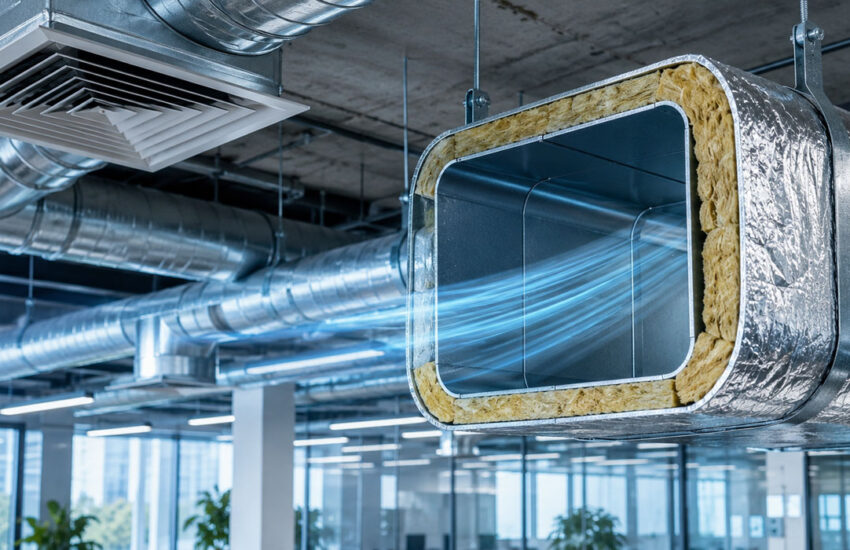
What Is an AC Insulated Duct? Complete
Introduction
In today’s energy-conscious world, HVAC systems are expected to deliver more than just cooling and heating. Building owners, facility managers, architects, and MEP consultants now look for solutions that improve energy efficiency, reduce operating costs, and create healthier indoor environments. While air conditioning units, chillers, and air handling units often receive the most attention, one essential component that significantly influences HVAC performance is the AC insulated duct.
An AC insulated duct is designed to transport conditioned air while minimizing heat gain, heat loss, and condensation. By maintaining the temperature of the air as it travels through the duct network, insulated ducts help HVAC systems operate more efficiently and provide consistent comfort throughout a building.
Whether it is a commercial office, hospital, shopping mall, hotel, educational institution, industrial facility, or residential project, insulated duct systems have become a standard choice in modern HVAC installations. Understanding how they work and why they are important can help project owners make informed decisions that improve long-term system performance.
What Is an AC Insulated Duct?
An AC insulated duct is an HVAC air duct that is covered or manufactured with insulating material to reduce heat transfer between the conditioned air inside the duct and the surrounding environment. Unlike conventional ducts, insulated ducts are specifically designed to preserve the temperature of the air throughout its journey from the air handling unit (AHU) or air conditioning system to occupied spaces.
The insulation may be applied externally using materials such as glass wool, elastomeric rubber, or rock wool, or it may be integrated into the duct itself, as seen in pre-insulated duct systems. Regardless of the construction method, the primary objective remains the same: maintain thermal efficiency, prevent condensation, and improve the overall performance of the HVAC system.
In buildings where ducts pass through hot ceilings, service shafts, or outdoor areas, insulation becomes even more critical. Without it, cooled air can absorb heat from the surroundings before reaching the occupied space, forcing the HVAC equipment to work harder and consume more electricity.
Why Is Duct Insulation Important in HVAC Systems?
The efficiency of an HVAC system depends not only on the quality of its equipment but also on how effectively conditioned air is transported. Every degree of temperature loss inside the ductwork represents wasted energy. Duct insulation acts as a protective barrier that minimizes these losses and ensures the air delivered into rooms remains close to its intended temperature.
Another important reason for insulation is condensation control. When cold air flows through uninsulated ducts in humid environments, moisture can form on the outer surface. This condensation may lead to water stains, ceiling damage, corrosion, mold growth, and poor indoor air quality. Proper insulation prevents the duct surface from reaching the dew point, significantly reducing these risks.
Insulation also contributes to acoustic performance by reducing noise generated by airflow and HVAC equipment. This creates quieter indoor environments, which is particularly beneficial in hospitals, hotels, offices, classrooms, and conference facilities.
How Does an AC Insulated Duct Work?
An insulated duct works by slowing the transfer of heat between the conditioned air inside the duct and the surrounding environment. The insulation layer creates thermal resistance, helping the air retain its temperature as it moves through the duct network.
For example, during summer, cooled air leaving the air handling unit travels through ducts installed above false ceilings, where ambient temperatures are often much higher than the conditioned air. Without insulation, the cool air absorbs heat, reducing cooling efficiency. With proper insulation, the air remains cooler until it reaches the supply grilles or diffusers.
In winter, the same insulation helps heated air retain its warmth while traveling through the duct system. This year-round thermal protection improves HVAC performance and reduces unnecessary energy consumption.
Types of AC Insulated Ducts
Different HVAC projects require different insulated duct solutions. The choice depends on building design, operating conditions, budget, and energy efficiency goals.
External Insulated GI Duct
This is one of the most common systems used in commercial HVAC projects. Galvanized Iron (GI) ducts are wrapped externally with insulation materials such as glass wool or elastomeric rubber. An outer protective layer is then applied to safeguard the insulation from moisture and mechanical damage.
Pre-Insulated Duct
Pre-insulated ducts are manufactured using rigid insulation panels with protective inner and outer facings. These systems combine the duct and insulation into a single product, reducing installation time and structural load while delivering excellent thermal performance.
PUF Insulated Duct
Polyurethane Foam (PUF) insulated ducts provide high thermal resistance with relatively thin insulation. They are widely used in projects where energy efficiency is a priority.
Rock Wool Insulated Duct
Rock wool insulation is preferred for applications requiring both thermal insulation and enhanced fire resistance. It is commonly used in industrial facilities and buildings with stringent fire safety requirements.
Benefits of Using AC Insulated Ducts
The advantages of insulated ducts extend beyond energy savings. One of the biggest benefits is improved HVAC efficiency. By maintaining supply air temperature, insulated ducts reduce the workload on air conditioning equipment, resulting in lower electricity consumption and reduced operating costs.
Another important benefit is consistent indoor comfort. Proper insulation ensures that conditioned air reaches every occupied space at the intended temperature, helping eliminate hot and cold spots throughout the building.
Insulated ducts also reduce condensation, which protects ceilings, walls, and building finishes from moisture damage. In humid climates, this is especially important for maintaining the integrity of interior spaces.
Noise reduction is another significant advantage. The insulation layer absorbs sound generated by airflow and mechanical equipment, creating quieter indoor environments that improve occupant comfort.
Finally, insulated duct systems contribute to longer equipment life. When HVAC systems operate more efficiently, compressors, fans, and blowers experience less strain, reducing wear and extending service life.
Where Are AC Insulated Ducts Used?
AC insulated ducts are widely used in commercial, industrial, and institutional buildings where efficient air distribution is essential. Office complexes rely on insulated ductwork to maintain comfortable working environments while reducing energy costs. Hospitals and healthcare facilities use insulated ducts to support precise temperature control and maintain healthy indoor air quality.
Hotels, shopping malls, airports, educational institutions, pharmaceutical plants, manufacturing facilities, and residential apartments also depend on insulated duct systems to achieve reliable HVAC performance. In each of these environments, insulation helps improve comfort while supporting long-term operational efficiency.
How to Choose the Right AC Insulated Duct
Choosing the right insulated duct requires evaluating several important factors. The insulation material should provide adequate thermal resistance while meeting project-specific fire safety and moisture resistance requirements. Duct construction quality is equally important, as poorly fabricated ductwork can lead to air leakage and reduced system efficiency.
Project owners should also consider insulation thickness, ease of installation, long-term maintenance requirements, and compatibility with local building codes and HVAC standards. Working with an experienced HVAC duct manufacturer ensures the selected system is properly designed for the project’s operating conditions and performance objectives.
Common Mistakes to Avoid
One of the most common mistakes is selecting insulation based solely on cost. Low-quality insulation may degrade quickly, reducing thermal performance and increasing maintenance requirements.
Improper installation is another frequent issue. Gaps in insulation, poorly sealed joints, and damaged vapor barriers can significantly reduce efficiency and increase the risk of condensation.
Neglecting routine inspections is also a mistake. Even high-quality insulated duct systems should be checked periodically to identify damage, moisture intrusion, or air leakage before these issues affect HVAC performance.
Maintenance Tips for Long-Term Performance
Regular maintenance helps maximize the lifespan and efficiency of insulated duct systems. Periodic inspections should focus on insulation integrity, duct joints, support systems, and vapor barriers. Damaged insulation should be repaired promptly to prevent energy loss and moisture problems.
Cleaning ducts and associated air distribution components, including grilles and diffusers, also supports better airflow and indoor air quality. Scheduled maintenance ensures the HVAC system continues operating efficiently while minimizing unexpected repair costs.
Frequently Asked Questions
What is the purpose of an AC insulated duct?
Its primary purpose is to reduce heat transfer, prevent condensation, improve energy efficiency, and maintain the temperature of conditioned air throughout the HVAC system.
Which insulation material is best for HVAC ducts?
The best material depends on the application. Glass wool, elastomeric rubber, rock wool, and polyurethane foam are all commonly used based on thermal performance, fire resistance, and moisture protection requirements.
Do insulated ducts save electricity?
Yes. By reducing thermal losses, insulated ducts help HVAC equipment operate more efficiently, lowering electricity consumption and operating costs.
Are insulated ducts suitable for residential buildings?
Absolutely. They are widely used in residential apartments and homes, as well as commercial and industrial projects, to improve comfort and energy efficiency.
Conclusion
An AC insulated duct is much more than an accessory within an HVAC system. It is a critical component that protects conditioned air, improves energy efficiency, reduces condensation, enhances indoor comfort, and extends the life of HVAC equipment. As energy costs continue to rise and building standards evolve, insulated duct systems have become an essential part of efficient and sustainable HVAC design.
Whether you are planning a new construction project or upgrading an existing ventilation system, investing in high-quality insulated ductwork can deliver long-term operational savings, reliable performance, and superior indoor environmental quality. Choosing a trusted HVAC duct manufacturer ensures that your system is built to meet the demands of modern buildings while supporting efficient air distribution for years to come.


