
How Insulated Ducts Reduce Energy Costs in
Why Duct Insulation Is One of the Smartest Investments in HVAC Efficiency
As energy prices continue to rise and sustainability becomes a priority for businesses worldwide, commercial building owners are increasingly looking for ways to reduce operational costs without compromising occupant comfort. While much attention is often given to energy-efficient chillers, smart controls, and high-performance HVAC equipment, one crucial component frequently goes unnoticed: duct insulation.
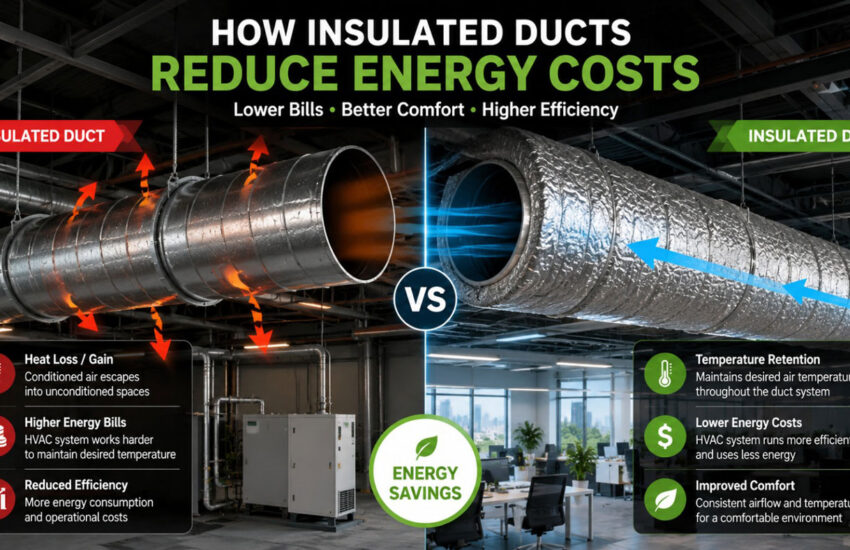
Ductwork serves as the transportation network for heated and cooled air throughout a building. However, without proper insulation, a significant portion of that conditioned air can lose or gain heat before reaching its intended destination. This forces HVAC systems to work harder, consume more energy, and increase operating expenses.
Insulated ducts help solve this problem by maintaining air temperature during transportation, improving system efficiency, and reducing energy waste. For commercial offices, hospitals, shopping malls, hotels, warehouses, and industrial facilities, duct insulation can deliver substantial long-term savings while supporting sustainability goals.
Understanding Insulated Ducts
Insulated ducts are air distribution channels covered with thermal insulation materials designed to reduce heat transfer between the air inside the duct and the surrounding environment.
These insulation materials may include:
- Fiberglass insulation
- Mineral wool
- Elastomeric foam
- Polyurethane insulation
- Phenolic foam insulation
The insulation layer acts as a thermal barrier, helping maintain the desired temperature of conditioned air as it travels through the HVAC system.
Whether transporting cooled air during summer or heated air during winter, insulated ducts minimize temperature losses and improve overall HVAC performance.
The Hidden Energy Loss in Uninsulated Duct Systems
Many commercial buildings have ductwork running through unconditioned areas such as:
- Rooftops
- Basements
- Service shafts
- Mechanical rooms
- Parking structures
- Utility corridors
In these environments, temperature differences between the conditioned air inside the duct and the surrounding space can be significant.
For example, chilled air moving through a hot rooftop duct may absorb heat from the surrounding environment. Similarly, heated air traveling through cold service areas can lose valuable thermal energy before reaching occupied spaces.
As a result, HVAC equipment must work longer and harder to compensate for these losses.
Over time, this additional energy consumption can have a substantial impact on utility costs.
How Insulated Ducts Improve Energy Efficiency
Minimizing Heat Gain and Heat Loss
The primary benefit of duct insulation is reducing unwanted heat transfer.
Insulation helps maintain air temperature throughout the distribution system, ensuring that conditioned air reaches its destination with minimal thermal loss.
This allows HVAC equipment to operate more efficiently while reducing the need for additional cooling or heating.
The result is lower energy consumption and improved system performance.
Reducing HVAC Equipment Workload
When ducts are properly insulated, HVAC equipment does not need to compensate for temperature losses occurring during air transport.
This reduces the workload on:
- Air handling units (AHUs)
- Chillers
- Boilers
- Heat pumps
- Fans and blowers
Lower equipment workload translates directly into reduced electricity consumption and operating costs.
In many commercial buildings, these savings accumulate year after year, making insulation a highly cost-effective investment.
Improving System Efficiency
HVAC systems are designed to deliver conditioned air at specific temperatures.
Uninsulated ducts can compromise this performance by altering air temperatures before they reach occupied spaces.
Insulated ducts help maintain design conditions throughout the air distribution network, allowing the HVAC system to perform closer to its intended efficiency levels.
Improved efficiency often contributes to better energy ratings and sustainability certifications.
Preventing Condensation and Moisture Problems
Energy efficiency is not the only advantage of insulated duct systems.
In cooling applications, temperature differences between cold duct surfaces and warm surrounding air can create condensation.
Moisture accumulation can lead to:
- Mold growth
- Corrosion
- Ceiling damage
- Insulation deterioration
- Indoor air quality issues
Proper insulation prevents duct surface temperatures from falling below the dew point, significantly reducing the risk of condensation.
This protects both the HVAC system and the building structure.
Enhancing Occupant Comfort
Occupant comfort remains one of the primary objectives of any HVAC system.
Temperature fluctuations caused by thermal losses can create uneven conditions throughout a building.
Some areas may receive warmer air than intended during cooling mode, while others may experience insufficient heating during colder months.
Insulated ducts help maintain consistent air temperatures, improving comfort levels and creating a more pleasant indoor environment.
In offices, educational institutions, healthcare facilities, and hospitality environments, occupant comfort directly influences satisfaction and productivity.
Supporting Sustainability Goals
Modern businesses are increasingly focused on reducing their environmental impact.
Energy-efficient HVAC systems play a significant role in achieving sustainability objectives.
By reducing energy consumption, insulated duct systems help lower:
- Carbon emissions
- Utility costs
- Building energy intensity
- Environmental footprint
Many green building certification programs reward projects that incorporate energy-saving HVAC strategies, including effective duct insulation.
For organizations pursuing sustainability certifications, insulated ducts can contribute to achieving compliance targets.
The Financial Benefits of Duct Insulation
Although insulation adds to the initial installation cost, the long-term financial benefits often outweigh the investment.
Commercial building owners can benefit from:
Lower Energy Bills
Reduced thermal losses mean less energy is required to maintain indoor conditions.
Over time, utility savings can provide an attractive return on investment.
Reduced Maintenance Costs
HVAC systems operating under lower loads typically experience less wear and tear.
This can reduce maintenance requirements and extend equipment lifespan.
Longer Equipment Life
By minimizing system workload, insulated ducts help protect critical HVAC components from excessive stress.
This can delay equipment replacement and reduce capital expenditures.
Where Insulated Ducts Are Most Important
While insulation benefits nearly every HVAC application, it is particularly valuable in:
- Commercial office buildings
- Shopping malls
- Hotels
- Hospitals
- Data centers
- Airports
- Industrial facilities
- Educational institutions
Buildings with extensive rooftop ductwork or long duct runs passing through unconditioned spaces often experience the greatest energy savings.
Choosing the Right Insulation Solution
Not all insulation materials are suitable for every project.
Several factors should be considered when selecting duct insulation:
Climate Conditions
Hot and humid climates often require higher insulation performance to prevent condensation and thermal gain.
Operating Temperatures
Heating and cooling systems have different insulation requirements depending on airflow temperatures.
Space Constraints
Some applications may require thinner insulation materials while maintaining thermal performance.
Fire Safety Requirements
Commercial buildings must comply with applicable fire and safety regulations when selecting insulation products.
Working with experienced HVAC consultants and duct manufacturers helps ensure the most appropriate solution is selected.
The Future of Energy-Efficient Duct Systems
As energy regulations become stricter and operating costs continue to rise, insulated duct systems are becoming a standard feature in modern commercial construction.
Advances in insulation technology are delivering:
- Improved thermal performance
- Reduced material thickness
- Better moisture resistance
- Enhanced fire safety
- Longer service life
Combined with smart building technologies and high-efficiency HVAC equipment, insulated ducts will continue to play a crucial role in reducing building energy consumption.
Conclusion
While often overlooked, duct insulation is one of the most effective ways to improve HVAC efficiency and reduce energy costs in commercial buildings. By minimizing heat transfer, preventing condensation, reducing equipment workload, and maintaining consistent air temperatures, insulated ducts deliver benefits that extend far beyond energy savings.
For building owners seeking lower operating expenses, improved occupant comfort, and stronger sustainability performance, investing in properly insulated duct systems is a practical and cost-effective strategy. In today’s energy-conscious world, insulated ducts are no longer an optional upgrade—they are an essential component of high-performance HVAC infrastructure.


