
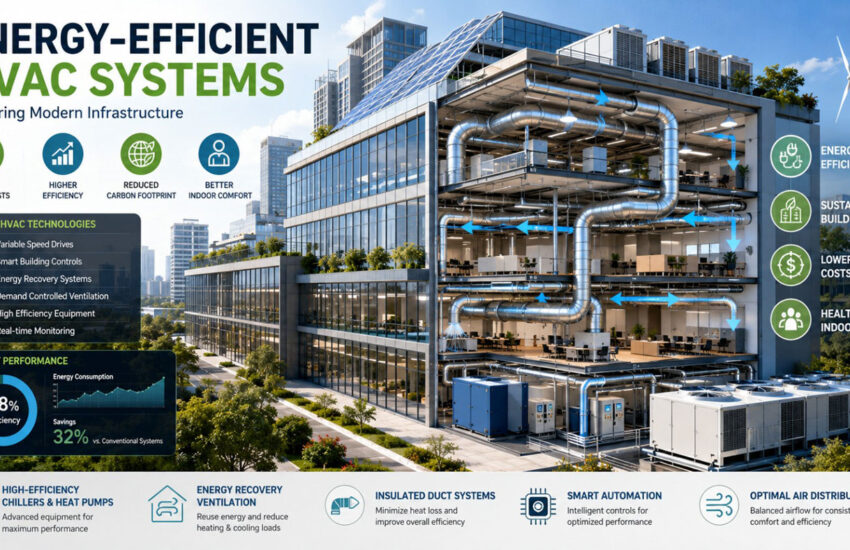
Energy-Efficient HVAC Systems for Modern Infrastructure
Why Energy Efficiency Has Become a Priority in Building Design
As cities expand and infrastructure projects become increasingly sophisticated, energy efficiency has moved from being a desirable feature to an essential requirement. Commercial buildings, industrial facilities, hospitals, airports, educational institutions, and data centers are under growing pressure to reduce energy consumption, lower operating costs, and meet sustainability goals.
At the center of this transformation lies the HVAC system.
Heating, Ventilation, and Air Conditioning (HVAC) systems are among the largest energy consumers in modern buildings, often accounting for 40% to 60% of total energy usage. As a result, improving HVAC efficiency has become one of the most effective ways to enhance building performance while reducing environmental impact.
Today’s energy-efficient HVAC systems combine advanced technologies, intelligent controls, optimized ductwork, and sustainable design principles to deliver superior comfort with significantly lower energy consumption.
For modern infrastructure projects, investing in efficient HVAC solutions is no longer simply about reducing utility bills—it is about creating smarter, healthier, and more sustainable buildings.
The Growing Demand for Sustainable Infrastructure
Governments, developers, and building owners worldwide are placing greater emphasis on sustainable construction practices.
Several factors are driving this shift:
- Rising energy costs
- Environmental regulations
- Carbon reduction targets
- Green building certifications
- Occupant wellness requirements
- Long-term operational savings
Modern infrastructure must balance comfort, efficiency, and environmental responsibility.
HVAC systems play a critical role in achieving these objectives.
What Makes an HVAC System Energy-Efficient?
An energy-efficient HVAC system is designed to deliver the required heating, cooling, ventilation, and air quality performance while using the least amount of energy possible.
This involves optimizing every component of the system, including:
- Air handling units (AHUs)
- Chillers
- Heat pumps
- Ventilation systems
- Duct networks
- Control systems
- Insulation
- Air distribution equipment
Efficiency is not determined by equipment alone. The entire HVAC ecosystem must work together to minimize energy waste and maximize performance.
High-Efficiency Equipment Improves Performance
Modern HVAC equipment has evolved significantly over the past decade.
Today’s systems are designed with advanced technologies that improve efficiency while reducing operating costs.
Examples include:
Variable Speed Drives (VSDs)
Traditional HVAC equipment often operates at full capacity regardless of actual demand.
Variable Speed Drives allow motors and fans to adjust their speed based on real-time building requirements.
This reduces energy consumption while improving system responsiveness.
High-Efficiency Chillers
Modern chillers use advanced compressors, heat exchangers, and control technologies to achieve higher performance with lower power consumption.
These systems are particularly valuable in large commercial and industrial facilities.
Heat Pump Technology
Heat pumps provide both heating and cooling using significantly less energy compared to conventional systems.
As buildings move toward electrification, heat pumps are becoming increasingly popular in sustainable infrastructure projects.
The Importance of Efficient Duct Systems
While HVAC equipment receives significant attention, ductwork often has an equally important impact on energy performance.
Poorly designed or leaking duct systems can waste large amounts of conditioned air before it reaches occupied spaces.
Efficient duct systems help:
- Reduce pressure losses
- Minimize air leakage
- Improve airflow distribution
- Lower fan energy requirements
- Maintain consistent temperatures
Modern infrastructure projects increasingly use spiral duct systems because of their improved airflow characteristics and reduced leakage rates.
Proper duct insulation further enhances efficiency by preventing unwanted heat gain and heat loss during air distribution.
Smart Controls Are Revolutionizing HVAC Efficiency
One of the biggest advancements in modern HVAC technology is the integration of intelligent building controls.
Smart HVAC systems continuously monitor building conditions and adjust operations automatically.
These systems can track:
- Occupancy levels
- Indoor temperature
- Humidity
- Carbon dioxide levels
- Air quality
- Energy consumption
Using real-time data, HVAC systems can optimize performance and avoid unnecessary energy use.
For large commercial buildings, these technologies can deliver significant long-term savings.
Demand-Controlled Ventilation
Traditional ventilation systems often provide the same amount of fresh air regardless of occupancy levels.
Demand-Controlled Ventilation (DCV) adjusts airflow based on actual building usage.
When occupancy is low, ventilation rates can be reduced without compromising indoor air quality.
This approach lowers energy consumption while maintaining a healthy indoor environment.
Demand-controlled ventilation is particularly effective in:
- Offices
- Conference centers
- Educational institutions
- Airports
- Retail facilities
Energy Recovery Systems
One of the most effective ways to improve HVAC efficiency is recovering energy that would otherwise be wasted.
Energy Recovery Ventilators (ERVs) and Heat Recovery Systems capture energy from exhaust air and transfer it to incoming fresh air.
This reduces the workload on heating and cooling equipment.
Benefits include:
- Reduced energy costs
- Improved ventilation efficiency
- Lower HVAC equipment loads
- Enhanced sustainability performance
Many modern infrastructure projects now incorporate energy recovery systems as a standard design strategy.
Building Design and HVAC Efficiency
HVAC performance is closely linked to overall building design.
Architectural features that improve efficiency include:
- High-performance glazing
- Building insulation
- Solar shading systems
- Airtight construction
- Optimized building orientation
When HVAC systems are integrated into the building design process from the beginning, engineers can create more efficient and cost-effective solutions.
This collaborative approach is becoming increasingly common in large-scale infrastructure developments.
Indoor Air Quality and Energy Efficiency Can Work Together
For many years, there was a perception that improving indoor air quality required higher energy consumption.
Modern HVAC systems have changed that equation.
Today’s technologies allow buildings to achieve both:
- Excellent indoor air quality
- Reduced energy use
Through efficient ventilation design, advanced filtration, smart controls, and optimized airflow distribution, modern HVAC systems support healthier indoor environments without sacrificing efficiency.
This balance has become particularly important following increased awareness of indoor environmental health.
The Role of HVAC in Green Building Certifications
Energy-efficient HVAC systems contribute significantly to green building certification programs.
Projects pursuing sustainability standards often rely on HVAC strategies to earn credits related to:
- Energy performance
- Indoor environmental quality
- Carbon reduction
- Sustainable operations
Efficient HVAC systems are commonly integrated into certified office buildings, hospitals, airports, educational campuses, and commercial developments worldwide.
The Future of Energy-Efficient HVAC Systems
The HVAC industry is undergoing rapid innovation.
Emerging technologies include:
- Artificial intelligence-based controls
- Predictive maintenance systems
- Digital twins
- Smart sensors
- Advanced energy analytics
- Low-carbon refrigerants
These innovations will allow buildings to become even more efficient while improving occupant comfort and operational reliability.
As infrastructure continues to evolve, HVAC systems will play an increasingly important role in achieving sustainability and energy management objectives.
Conclusion
Energy-efficient HVAC systems have become a cornerstone of modern infrastructure. By combining high-performance equipment, intelligent controls, optimized ductwork, energy recovery technologies, and sustainable design principles, today’s HVAC systems deliver exceptional comfort while significantly reducing energy consumption.
For building owners and developers, the benefits extend far beyond lower utility bills. Energy-efficient HVAC systems improve occupant comfort, enhance indoor air quality, support environmental goals, and contribute to long-term operational success.
As the demand for sustainable infrastructure continues to grow, investing in efficient HVAC solutions is no longer just a smart business decision—it is an essential part of building for the future.


