
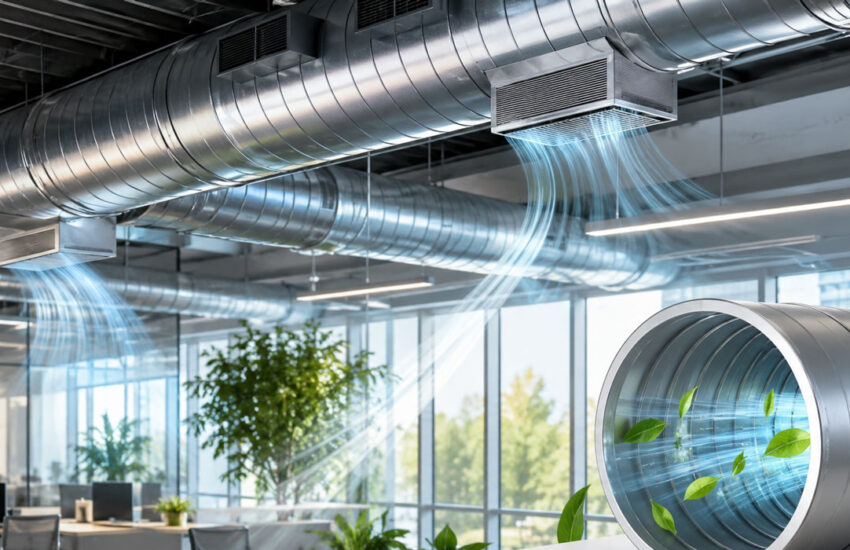
How Proper Duct Design Improves Indoor Air
The Hidden Role of Ductwork in Creating Healthier Indoor Environments
When discussing indoor air quality (IAQ), most people immediately think of air purifiers, ventilation systems, or HVAC filters. While these components certainly play important roles, one critical element is often overlooked: the duct system itself.
Ductwork acts as the transportation network for conditioned and ventilated air throughout a building. Whether in offices, hospitals, shopping malls, hotels, educational institutions, manufacturing plants, or residential complexes, ducts determine how effectively fresh, clean air reaches occupants.
A poorly designed duct system can undermine even the most advanced HVAC equipment, leading to poor ventilation, uneven airflow, contaminant buildup, and reduced indoor comfort. On the other hand, a properly engineered duct network supports healthy indoor environments by ensuring efficient air distribution, contaminant control, and optimal ventilation performance.
As awareness of indoor health and workplace wellness continues to grow, proper duct design has become a key factor in achieving superior indoor air quality.
Why Indoor Air Quality Matters
Modern buildings are designed to be more energy-efficient than ever before. While tighter building envelopes help reduce energy consumption, they can also limit natural ventilation.
As a result, indoor air quality has become increasingly dependent on HVAC systems and duct networks.
Poor indoor air quality can contribute to:
- Respiratory discomfort
- Allergic reactions
- Headaches and fatigue
- Reduced productivity
- Increased absenteeism
- Unpleasant odors
- Higher health risks for vulnerable occupants
For businesses, poor air quality can affect employee performance, customer satisfaction, and overall building value.
In environments such as hospitals, laboratories, schools, and pharmaceutical facilities, maintaining clean indoor air is not just desirable—it is essential.
The Connection Between Duct Design and Air Quality
Duct systems are responsible for delivering fresh air and removing stale air from occupied spaces.
If the duct network is poorly designed, airflow may become inconsistent, ventilation effectiveness may decline, and contaminants can accumulate in certain areas.
Proper duct design ensures that clean, conditioned air reaches every part of the building while maintaining the airflow patterns necessary to remove pollutants.
In simple terms, good duct design helps buildings breathe properly.
Ensuring Adequate Ventilation
One of the primary functions of ductwork is to distribute fresh outdoor air throughout a facility.
Ventilation is essential for removing indoor pollutants generated by:
- Occupants
- Office equipment
- Cleaning chemicals
- Industrial processes
- Building materials
- Cooking activities
A properly designed duct system delivers sufficient fresh air to each occupied zone according to building requirements.
Without adequate ventilation, carbon dioxide levels can rise, indoor pollutants can accumulate, and occupant comfort may decline.
Effective duct design helps maintain healthy air exchange rates while supporting energy-efficient operation.
Promoting Balanced Air Distribution
Uneven airflow is one of the most common causes of indoor air quality problems.
Poorly designed duct systems may deliver excessive airflow to some areas while starving others of ventilation.
This imbalance can create:
- Stagnant air zones
- Temperature inconsistencies
- Humidity problems
- Pollutant accumulation
Proper duct sizing, layout design, and airflow balancing ensure that conditioned air is distributed evenly throughout the building.
Balanced airflow helps maintain consistent indoor conditions and improves occupant comfort.
Reducing Dust and Contaminant Accumulation
The internal design of a duct system significantly affects how airborne particles move through the network.
Poorly designed ducts with excessive bends, abrupt transitions, or improper airflow velocities can encourage dust accumulation within the system.
Over time, accumulated dust may become a source of contamination and negatively impact air quality.
Well-designed duct systems minimize turbulence and maintain airflow characteristics that reduce particle settlement.
This helps keep the duct network cleaner and improves long-term performance.
Preventing Air Leakage
Air leakage is another major factor affecting indoor air quality.
Leaking ducts can allow contaminants from unconditioned spaces to enter the HVAC system.
Potential pollutants may include:
- Dust
- Insulation fibers
- Mold spores
- Chemical contaminants
- Outdoor pollutants
In addition, conditioned air lost through leakage reduces ventilation effectiveness.
Proper duct design incorporates airtight construction principles, high-quality fabrication, and effective sealing methods to minimize leakage.
A tighter duct system contributes directly to cleaner indoor air.
Supporting Effective Filtration
Air filters are only effective when air flows through them properly.
A poorly designed duct network can create airflow imbalances that reduce filtration efficiency.
When airflow is inconsistent, some areas may receive inadequately filtered air while others experience excessive pressure drops.
Proper duct design ensures that filtration systems operate as intended by maintaining consistent airflow and pressure conditions throughout the HVAC system.
This helps maximize contaminant removal and improve overall air quality.
Managing Humidity Levels
Indoor air quality is influenced not only by pollutants but also by humidity levels.
Excess moisture can contribute to:
- Mold growth
- Mildew formation
- Bacterial development
- Material deterioration
Conversely, excessively dry air can cause discomfort and respiratory irritation.
Properly designed duct systems help maintain balanced humidity by distributing conditioned air effectively and supporting HVAC moisture control functions.
Consistent humidity management contributes to healthier indoor environments and improved occupant comfort.
The Importance of Duct Material Selection
The choice of duct material can also affect indoor air quality performance.
Common duct materials include:
- Galvanized steel
- Stainless steel
- Aluminum
These materials offer smooth interior surfaces that help minimize particle accumulation and support easier maintenance.
High-quality materials also resist corrosion and contamination over time, helping preserve airflow quality.
Selecting appropriate materials is particularly important in healthcare, pharmaceutical, food processing, and cleanroom environments.
Why Spiral Ducts Are Gaining Popularity
Modern commercial and industrial projects increasingly utilize spiral duct systems because of their airflow advantages.
Compared to traditional rectangular ducts, spiral ducts often provide:
- Lower air leakage rates
- Reduced turbulence
- Improved airflow efficiency
- Easier maintenance
- Better contaminant control
Their smooth circular design supports cleaner airflow patterns and contributes to improved indoor environmental quality.
As building owners prioritize both energy efficiency and occupant health, spiral ducts continue to gain popularity across many sectors.
The Role of Proper Maintenance
Even the best duct design requires ongoing maintenance to preserve indoor air quality.
Regular inspections help identify:
- Dust accumulation
- Damaged insulation
- Air leakage
- Corrosion
- Mold growth
Preventive maintenance ensures that the duct system continues to operate efficiently and supports healthy indoor conditions.
A well-maintained duct network can provide reliable performance for decades.
Smart Buildings and the Future of Indoor Air Quality
Advances in smart building technology are transforming how indoor air quality is monitored and managed.
Modern HVAC systems increasingly use:
- Air quality sensors
- Carbon dioxide monitoring
- Humidity tracking
- Automated airflow controls
- Building management systems
These technologies allow facility managers to optimize airflow and ventilation performance in real time.
However, even the most advanced monitoring systems depend on a well-designed duct network to distribute air effectively throughout the building.
Conclusion
Indoor air quality is influenced by many factors, but few are as important as duct design. A properly engineered duct system ensures that fresh air reaches occupants efficiently, contaminants are removed effectively, humidity is controlled, and filtration systems perform as intended.
By minimizing air leakage, promoting balanced airflow, reducing dust accumulation, and supporting ventilation effectiveness, quality duct design becomes a powerful tool for creating healthier indoor environments.
As businesses, institutions, and industries place greater emphasis on employee well-being, sustainability, and operational efficiency, investing in proper duct design is no longer just an HVAC decision—it is a commitment to better indoor living and working conditions.


